17 spans, 180ft long, Tarr Steps in Exmoor is the longest "clapper" bridge in the UK
The horizontal stones weigh up to 2 tons
It is a Scheduled Ancient Monument
The stones have been discretely numbered so that flood damage can be accurately repaired
Smaller stones are used to protect the bridge supports.
Well worth a visit. (We timed it just right as parking charges in the designated car park up the hill stop at 6pm), Very cooling on the hottest day of the year.
I had this post all lined up before visiting the 'Botanics' (officially the Royal Botanic Gardens Edinburgh RBGE) yesterday.
On recent visits to the Pentland Hills we have been delighted by the emergence through the grass of what I take to be the Northern Marsh Orchid (Dactylorhiza purpurella). On emergence you can only get an inkling into the glory to come.
Today I was delighted to spot a similar flower in captivity at the Botanics. You can imagine my surprise when I checked out the label only to find this specimen was the Madieran Orchid!
It seems this one has got spotty leaves and an RHS Garden Merit award. For my part it is the one up in the hills that I will treasure.
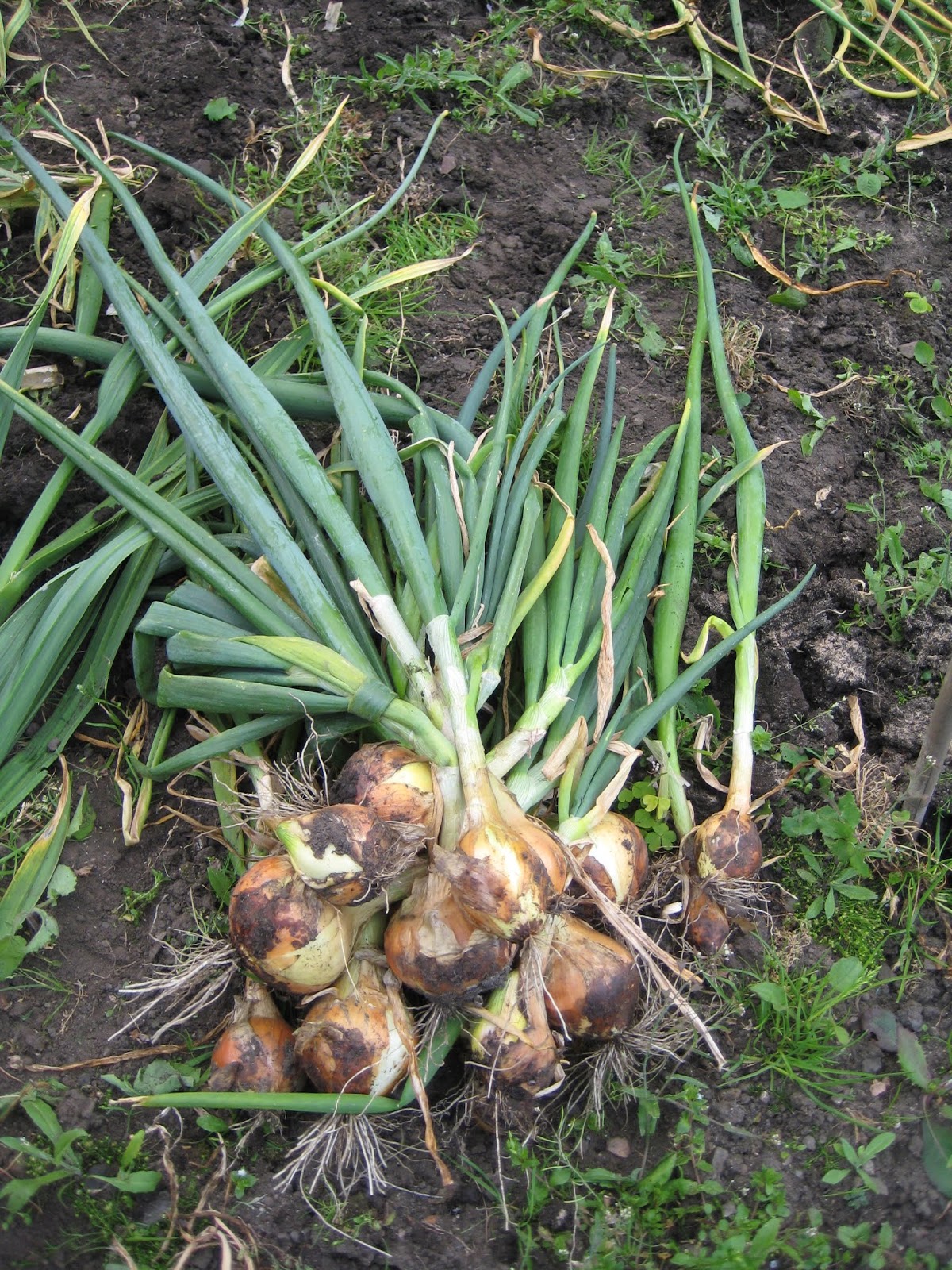
Today it was time to harvest the overwintered alliums. After a dry spell we are forecast some rain every day for the rest of the week. Perhaps I should not be as surprised that the homegrown variety performed so well. This is Doocot with parentage grown in Elgin, Scotland (not far from Inverness). Sold as "really garlicky garlic" I couldn't resist locally sourced stock.
Scottish grown 'Doocot'
Originating from the other side of the world Shenshu Yellow is a proven overwinter performer.
Japanese onion variety Shenshu Yellow
Our elephant garlic is another proven performer. We keep our own cloves for planting each year. This must be about 8 generations down from the first (single) clove we bought.
Elephant Garlic = African or Indian?
It must be noted that we have more uncloven bulbs than usual this year, probably down to the mild winter.
Last but not least is the Early Purple Wight. Some good bulbs, some showing signs of rot.
Early Purple from the Isle of Wight
I have to point out that I consider it an achievement to get an allium harvest at all in Edinburgh. Every row has some gaps and despite adding a handful of sand per clove when planting some succumb to rot. But this year it has been worth it!
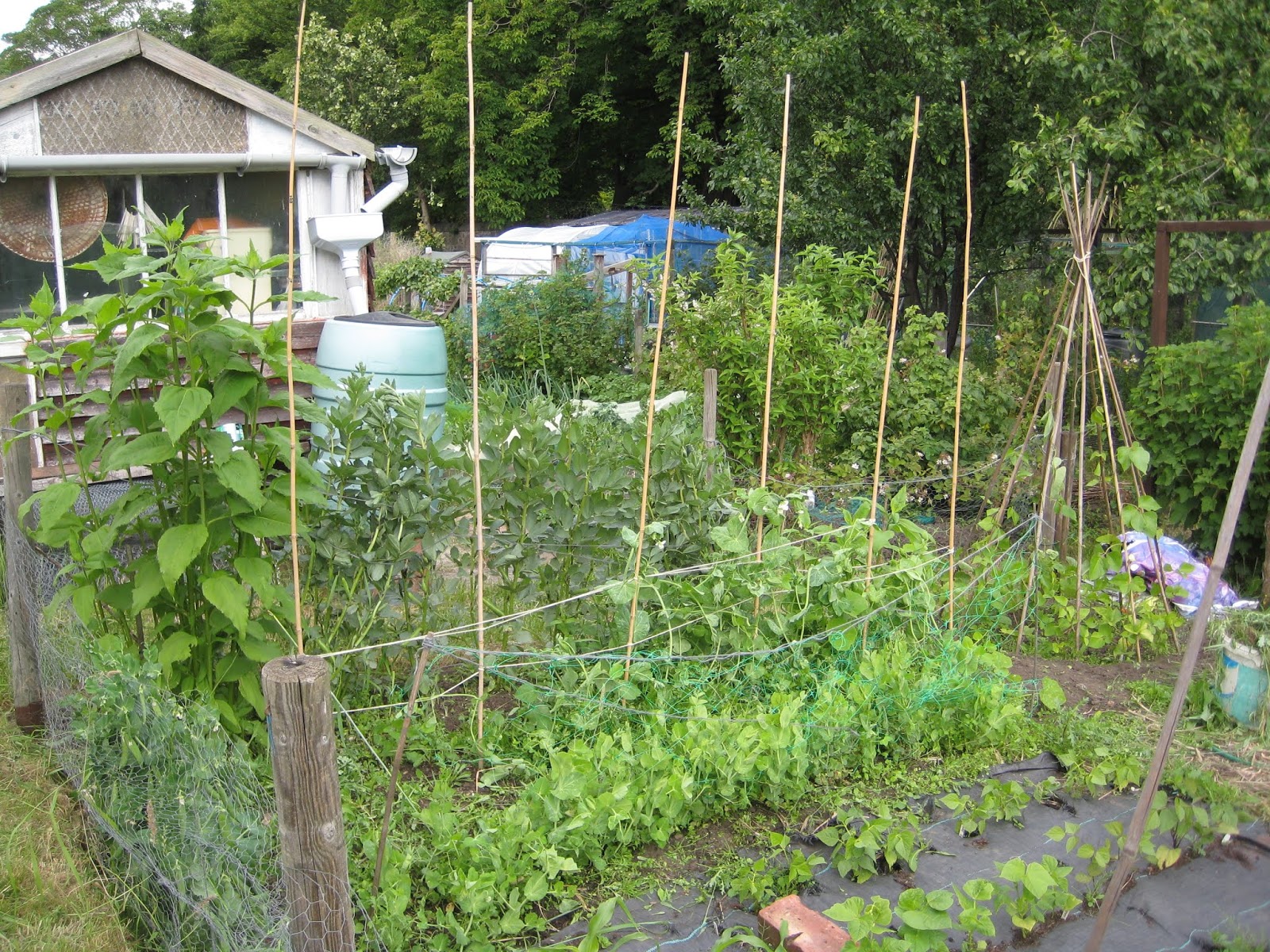
Having been away for the weekend it was a case of reacquainting myself with the state of play at the plot. Soft fruit is now cropping heavily.
Legumes are on their way but needed support and weeding. Potatoes second early potatoes are flowering and it is time to start on the earlies. (The single Jerusalem artichoke, in the corner, is the odd one out here. I have decided to treat this as a perennial rather than moving it around with the rotation). The runner beans are shooting up the poles, higher and higher.
Sometimes you just miss the boat with sowing seeds and so it was with Ragged Robin (Lychnis flos-cuculi) this year. But much to my delight there is a whole patch of it which has just burst into flower nearby. It is thriving in the damp conditions alongside our local pond. I reckon I would be hard pressed to provide this habitat in our back garden just with its half barrel pond!
Drove of Ragged Robin - or should that be a drift?
The hungry gap is coming to an end. Soon there will be new potatoes, peas, lettuces and broad beans to add to the rhubarb already harvesting. One crop that has taken me by surprise and jumped ahead of the rest seemingly out of nowhere is the flashy globe artichoke. How could I have forgotten how early this crops? I am following advice and removing the first heads to encourage the rest to grow to edible size. Its proper name is Cynara
scolymus and it is an edible thistle, but only edible if you pick it before it
flowers. Even then, only a very small
portion of the flower bud is edible and
it is not easy to extract from the top of the stem, behind the immature flower. Additional scrapings can be garnered from the base of
each ‘petal’ (or more correctly bract). So little of the plant is edible that you
wonder how this vegetable found advocates willing to grow it when food was scarce. But it did find
advocates, wealthy and influential ones.
If any vegetable is to be called the vegetable of monarchs then this is
it. Exotic, ostentatious, expensive,
status affirming. Henry VIII reputedly loved them (As did French, Spanish and Italian aristocracy way back to
the not so royal Theophrastus, Aristotle’s pupil) When Henry’s sister Mary, Queen of France, got married in 1515 the
commemorative picture showed her holding a globe artichoke. As with all scarce exotic
fruit and vegetables it was said to be an aphrodisiac.