November is not far off and it is time to gather in produce that is susceptible to the cold nights ahead.
Surprisingly the runner bean stand is still green and still producing some edible beans (in addition to the few swollen pods left to mature and produce seed for next year)
Next door the blueberries have definitely got the message that autumn is here and are putting on a fiery display. Still one or two berries have persisted or rather have been overlooked. These have been left for the birds, particularly as we had a bumper crop over the summer.
Jack frost has not appeared yet this year, as proven by the beans. But it won.'t be long now.
Now that it is Meteorological Autumn it is time to see how the crops in the Autumn bed are faring. Under the 4 seasons scheme all crops should be ready for harvesting before the month is out. There are some successes and some failures. Lets take a look:
AUTUMN
The autumn planting scheme was:
Beetroot
Tomato
Carrot
Fennel
Pepper (Cyklon)
Celeriac
Leeks
(Jolant)
Dwarf French Beans
Kohlrabi
Here are pictures of each square in turn with notes:
Leeks
Although an early variety (Jolant) these leeks are lagging behind and will need to be left for another month or two before harvesting. They could probably do with a bit of liquid feed. Leeks feature in Autumn, Winter and Spring beds. An earlier start is required for the Autumn ones.
Dwarf French Beans
Rammed full of greenery there has been a reasonable crop. Not sure that this variety is the best. A yellow or purple variety would help as the beans got "lost" behind the greenery.
Kohlrabi
A good choice but early growth was pecked to death by pigeons. Netting now in place and resowing has worked. Next year protection will be in place from the start.
Fennel
Peaked too early so the three remaining stems have bolted. Abundant feathery leaves. One stunning bulb was harvested in July by an unknown agency. 5 plants in a square foot was too many so the perpetrator probably did us a favour by thinning the crop!
Red Pepper Cyklon
A bit ambitious growing this outdoors in Scotland. Healthy green leaves, some flowers, but not any significant fruit. Squeezed in the middle it was not a fair contest. Verdict Not an appropriate choice for this location. Grow indoors in future.
Celeriac
Celeriac has been a bugbear for me in the past but I was encouraged by the results in the school garden last year. A single plant in this square. There is a picture of the root development below. Could do with a liquid feed. Also growing this in Winter with similar results.
Carrots - Missing!
Carrot are a bad choice for the school garden. Even with fleece the badger seeks them out and totally wipes them out. The two carrot square feet (Autumn and Winter) hove both been deeply excavated!
Tomato Totem
With more time for ripening this is an ideal variety for square foot growing. Some support helps:. A totem pole(?) Otherwise they keep themselves to themselves.
Beetroot
Old reliable beetroot has been happily growing overcrowded and uncared for it delivers without getting too big to crowd out its neighbours. Recommended for square foot gardening.
Beetroot Roots
Tomato Fruit
Celeriac Root
Hope you enjoyed this review.
Just for the record here are the other three seasons beds
The children return to school today and here is what will greet them in the school garden:
Now it is time for a spot the difference quiz:
A
B
Aside from the net to keep the pigeons off the kohlrabi, the difference is that a mature bulb of Florence fennel along with its feathery plumage has been removed by an agency unknown (middle left square foot) leaving a much weaker bulb. I hope this remaining specimen will grow on now its competition has been removed.
These are in the "Autumn" square foot bed. The neighbouring "Winter" bed is already full to brimming. It is the Swede that has been ravaged by the pigeons here (and now has a net over it)
You would have thought a tomato in a bucket in a greenhouse would be safe?
Well you would be wrong. Somebody selected a specimen from the back of this greenhouse . Curious because - as you can see the fence is higher than the greenhouse (7 or 8ft high)
Now before the bell rings don't forget the neighbouring wildflower meadow. I think it is high time for a haircut!
Local: If I was going to XXX I wouldn't start here...
I read that the vegetable seed companies are inundated with new orders, especially since the garden centres have shut their doors. So the question arises: What to grow?
First of all consider what space you have available. A windowsill, balcony, patio, garden or allotment? Microgreens, herbs, cucumber, chilli, tomato all suit the first whereas artichokes and asparagus would only suit the bigger sites. Patios are no longer limiting as "crops in pots" has become fashionable in the last decade - even potatoes.
Then there is the season - the reason for the poor joke above. Well the news is surprisingly good for the northern hemisphere. In the UK it is too late for garlic and other autumn planted crops (like rhubarb and raspberries) but still very early in the growing season for just about everything else! Broad beans spring to mind because they can be sown in autumn but also in early spring. It's not too late. In fact April is about the busiest month for sowing in the vegetable gardening calendar. As a rule, what you can't sow in April you can sow in May!
The key consideration for sowing/planting outdoors is the last night of frost. Here in Edinburgh mid May is the usual reference point, but further south you can expect an earlier date. That is not to promise that nature won't come up with a nasty surprise (Edinburgh has exceptionally had frost in June!). Generally plants are 'hardy', 'half hardy' or 'tender' to frost. Peas are half hardy whereas courgettes are tender. That's why you can sow peas outside before the last frost date but you need to protect courgettes and only plant them out after the danger is gone. For tender crops it is worth keeping an ear/eye out for the weather forecast in the days/weeks after planting out sensitive seedlings. Frost warnings feature larger as the year goes as even some weather forecasters are gardeners too.
So you have identified your growing space and are ready to sow. What's best to try? Something fast, something tasty?
'Fast' in gardening terms is relative. You cannot expect to beat 7 days for mustard and cress or other microgreens indoors. Proper salad leaves boast that they are ready in as little as 25 or 30 days. By contrast parsnips are notoriously 'in the ground' for 12 months. Although ready to be dug up in the autumn, there is a reason why they are associated with Christmas. Chillies and tomatoes take all summer to get cropping in Scotland, but then the challenge of getting a return at all is half the fun! In between these extremes most vegetable crops deliver in 40 to 90 days.
Tasty: Tastes differ but one rule is that schoolchildren don't like radishes (a shame as they are one of the fastest crops). Peas and beans, carrots and cabbages are all popular, but each has its own growing challenge. Some unfamiliar crops can turn out to be favourites. When the school garden produced a bumper crop of purple sprouting broccoli some children wouldn't even try it, but others did and enjoyed the novelty. Swiss chard is not common in the shops but really popular in many 'grow your own' households. Bulb fennel is not difficult to grow but divides opinion depending on where you sit on the aniseed tolerance scale. The brassica family (cabbage, kale, Brussel sprouts) is a must for most adults but a no no for many youngsters.
So, time to come off the fence. My top 5 starter vegetable recommendations are:
Mustard and Cress - Quick old fashioned reliable 'microgreens'
Carrots - 6 inches of soil needed for the homegrown taste money won't buy.
Peas - Straight from the pod - unforgettable - or 'peashoots' if you are in a hurry.
Swiss Chard - All the benefits of spinach but easier and with the bonus of buttery ribs.
Beetroot - Red or Gold, so sweet. Worth the wait.
Growing veg isn't as easy as it appears to be on telly, but it is remarkably rewarding in the first year and devilishly addictive once you have taken on the challenge of improving on last year.
Now here is a tune that seemed laughable not so long ago:
Days have shortened, temperatures have dropped, rain has been sweeping past and outdoor activities have become less attractive. It is tempting to just forget about the plot on the other side of town. That's not to say that there is nothing cropping at the moment. It's just that as soon as your gloves get wet you have to change them before you lose the use of your hands. So today three pairs of gloves at the ready I harvested The last of the row of fennel
Swiss chard:
and spinach:
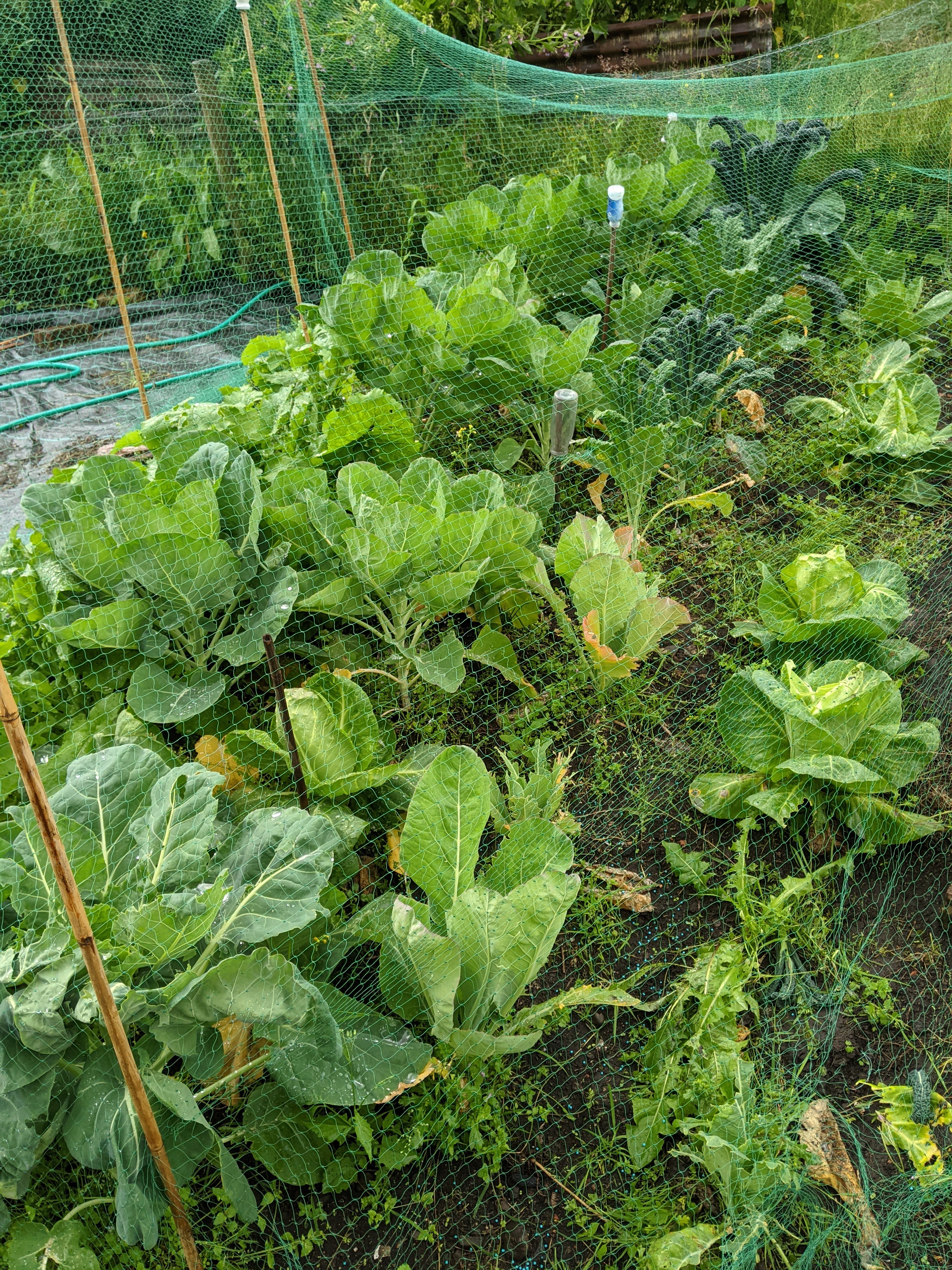
Cabbage:
Kohlrabi
Swede:
Carrots from under their cover:
and that's a row of salsify to the left which, like the parsnips, I have yet to explore. Less photogenic but also picked today Jerusalem artichoke and sprouting broccoli. There's plenty beetroot too and Brussel sprouts to come. The leeks I am leaving for when things get really depleted.
Nearly forgot to mention the late brassicas planted after clearing the strawberry patch! There's spring greens, kale and mooli in there.
So all in all I have still got lots of reasons to remember to visit the plot, (just don't ask me to do any weeding).
Specifically the courgettes are giving up. Here is today's harvest...
and last Sunday's.
I think that's it for this year. Can't complain because two plants kept up a steady supply throughout the summer. A third yellow one came to nothing - I think it was wind damaged soon after planting out. Two Jaune et Vert Squash failed to produce any fruit either. Kabocha (I guess it is a winter squash) produced a half dozen fruit even though it was crowded out by the Sharks Fin Melon which was as rampant as ever.